Publications
Corporate Affairs in Defence and Security: From Support Function to Strategic Business Enabler
For many years, the Corporate Affairs function was viewed within organisations as a supporting capability. Institutional relations, regulatory monitoring, reputation management, public affairs and stakeholder engagement all formed part of its remit. These responsibilities remain important today, but within the evolving Security and Defence ecosystem, their value extends far beyond their traditional role.
Corporate Affairs is increasingly becoming a direct driver of strategic positioning and business development. While this trend can be observed across highly regulated industries in general, it is particularly evident in the fields of Defence and Security.
Defence no longer operates as a relatively closed, stable and predictable environment, especially at a time when Europe is working towards the long-awaited objective of building a genuine European Defence. The sector has entered an unprecedented phase of expansion, characterised by regulatory transformation and the arrival of new actors that are reshaping the landscape.
In such an environment, understanding where decisions are made, how priorities are defined and which institutional frameworks will shape future growth is no longer a secondary exercise. It has become a competitive advantage.
A New European Cycle
Europe has entered a new defence cycle. The war in Ukraine, the deterioration of the security environment, pressure to strengthen capabilities and the drive towards greater strategic autonomy have accelerated a process that is no longer merely cyclical or temporary.
The European Commission has placed defence at the centre of its agenda. The Readiness 2030 framework promotes an explicit approach based on “spending better, together and European”, while opening the possibility of mobilising up to €800 billion for defence-related investment. This is complemented by SAFE, which provides up to €150 billion in loans for joint procurement, and the European Defence Fund (EDF), which allocates almost €7.3 billion to collaborative defence research and development between 2021 and 2027.
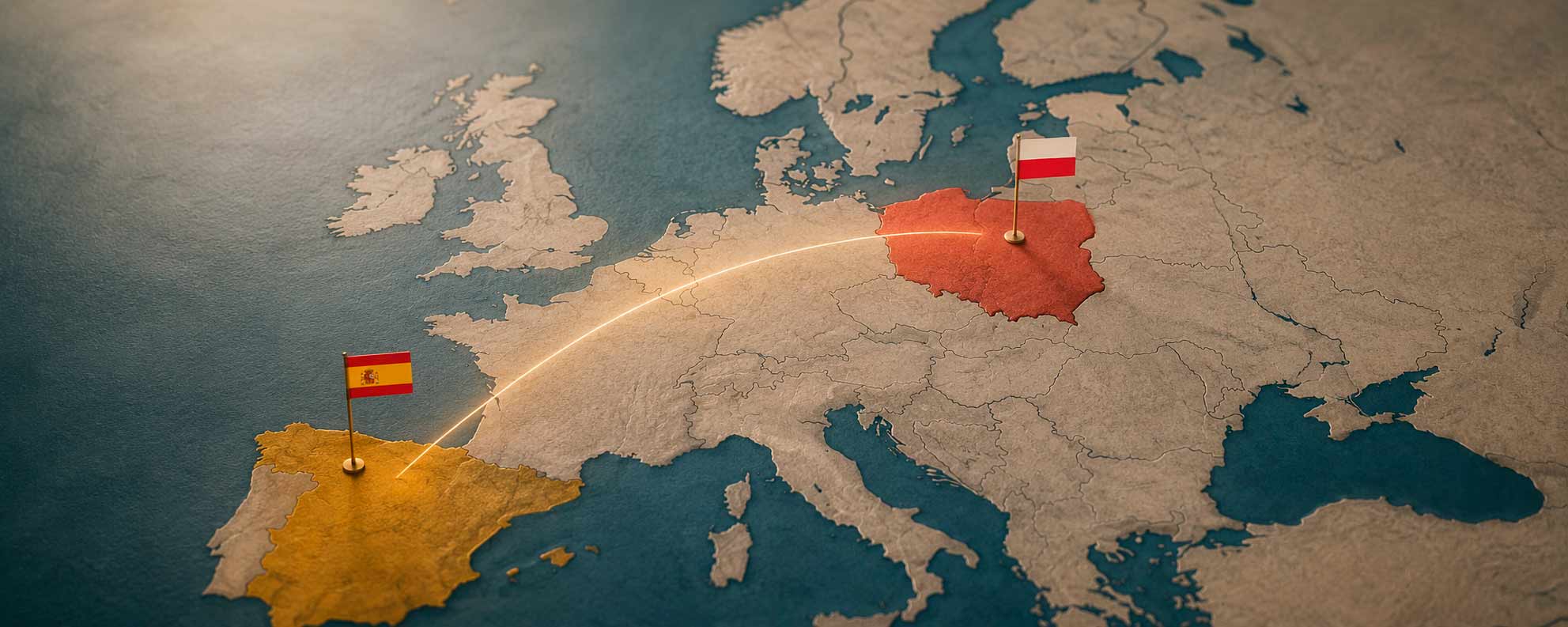
Spain has also become part of this dynamic. In 2025, the Government presented the Industrial and Technological Plan for Security and Defence, including an additional €10.47 billion investment package designed to raise defence spending from 1.4% to 2% of GDP, while linking this effort to reindustrialisation, innovation and dual-use technologies. A further package of Special Modernisation Programmes worth approximately €11 billion is also being prepared.
As a result, the sector is no longer defined solely by programmes managed by the Ministry of Defence. Today, it is equally shaped by European policy, common financial instruments, regulatory reforms, the definition of new capabilities and the need to accelerate the conversion of investment into operational delivery.
In this context, Corporate Affairs becomes a critical capability.
Traditional Defence and Extended Defence
This new environment affects not only the scale of investment but also the boundaries of the sector itself.
Defence is no longer a conversation limited to platform manufacturers, systems integrators and traditional suppliers. Today, it includes technology companies, critical infrastructure operators, energy providers, aerospace firms, telecommunications companies, data specialists, cybersecurity organisations, artificial intelligence developers, electronics manufacturers and autonomous systems providers.
At the same time, security can no longer be understood solely through a military lens.
The protection of critical infrastructure, energy resilience, cybersecurity, space assets, data, industrial capacity, supply chains, consumer goods networks, infrastructure and logistics have all become part of the same strategic conversation.
This is the era of Extended Defence.
A logic that significantly increases the number of organisations that need to understand the Security and Defence ecosystem, even if they have never operated within it or traditionally considered themselves part of it.
The Challenge Is Not Simply Entering the Ecosystem, but Positioning Within It
For many companies, particularly those operating in technology, energy, mobility, industry, telecommunications or infrastructure, interest in the defence sector is growing rapidly.
Yet gaining access to this environment is far more complex than it may appear from the outside.
Defence has its own language, timelines, institutional dynamics and models of interaction between government and industry.
Understanding who makes decisions, how programmes are structured, which capabilities are prioritised, which stakeholders matter most, whether national, European or allied levels are most relevant at each stage, and which partnerships may prove valuable is just as important as possessing a strong technological solution.
The reality is that many companies possess capabilities that are highly relevant to this ecosystem but struggle to translate them into an operational, industrial or institutional language recognised by decision-makers.
Likewise, organisations that are fully capable of capitalising on the opportunities created by this new cycle are not always aware of their own competitive advantages.
In a sector undergoing such rapid transformation, this ability to identify and translate capabilities becomes decisive.
A unique economic and business opportunity exists because a genuine need exists: the creation of a true European Extended Defence ecosystem. Those who recognise this first, understand its implications and adapt accordingly will emerge as the winners while simultaneously contributing to the fulfilment of that strategic requirement.
Brussels as a Business Environment
For many years, companies viewed Brussels primarily as a centre for regulatory monitoring, institutional engagement and networking.
Those functions remain important.
However, Brussels has also become, increasingly, a place where business opportunities are created directly.
Not only because much of the regulatory framework shaping the future European defence market is being developed there, but also because the European Commission is launching instruments that will influence who gains access to funding, who participates in consortia, which projects are prioritised, what European-content requirements are imposed and which capabilities are considered strategic.
This fundamentally changes the role of Corporate Affairs.
It is no longer simply about staying informed. It is about:
- Anticipating the direction of the European agenda.
- Understanding how policy developments will affect business models.
- Identifying complementary industrial partners.
- Building meaningful relationships within the right environments.
- Positioning organisations before the framework is finalised.
Those who arrive late in this process will lose not only influence, but potentially access to the market itself.
A Function That Impacts the Bottom Line
Within Security and Defence, Corporate Affairs is no longer merely a function that protects, explains or supports.
Above all, it is becoming a function that helps companies generate business more effectively, earlier and with greater stability.
How?
- By helping organisations identify which capabilities, technologies and solutions genuinely align with national and European priorities.
- By positioning companies before those who design programmes, establish eligibility criteria and structure funding mechanisms.
- By facilitating industrial partnerships at a time when European cooperation is no longer a tactical option but, increasingly, a prerequisite for participation in major programmes.
- By providing something particularly valuable in a rapidly evolving environment: anticipation.
In sectors where a regulatory adjustment, a change in eligibility criteria or a new European priority can completely reshape the opportunity landscape, anticipation translates directly into business value.
For this reason, Corporate Affairs can no longer be measured solely through reputation or relationships. It must also be assessed in terms of competitive positioning and return on investment.
Added Value for Institutions as Well
This transformation does not affect companies alone. It also challenges public institutions.
European defence today requires faster decision-making processes, simpler procedures, updated regulatory frameworks and administrative systems capable of operating at the pace demanded by a far more demanding geopolitical environment.
The European Commission itself has recognised this need through new financial instruments, simplification measures and reforms aimed at reducing friction in procurement and industrial cooperation.
Within this context, Corporate Affairs can also create value for institutions.
Not by replacing political decision-making, but by helping connect strategic requirements with industrial, business and regulatory realities.
In other words, by contributing to public policies that are more executable, more understandable for industry and more effective in mobilising capabilities.
At a time when Europe must translate ambition into delivery, and do so at the speed required by current challenges, this bridging function between public and private actors is becoming increasingly important.
The Growing Importance of Specialised Firms
This explains why specialised firms are gaining relevance.
As the ecosystem expands, so too does the need for organisations capable of interpreting institutional priorities, understanding market direction, translating business capabilities and facilitating meaningful relationships between industry, governments and European institutions.
Not as traditional intermediaries.
But as strategic interpreters of a rapidly evolving ecosystem.
This includes:
- International companies seeking to establish operations in Spain.
- Spanish organisations seeking access to European programmes.
- Technology firms looking to understand the defence environment.
- Industrial companies aiming to strengthen their position in Brussels.
- Public institutions requiring a deeper understanding of available industrial capabilities.
In all these cases, information alone is no longer sufficient.
What matters is the ability to make sense of that information and transform it into intelligence and action.
Because the transformation of European defence is not simply about spending more money.
It is about building a broader, more effective, more competitive ecosystem that is better connected to the wider economy.
In this environment, Corporate Affairs can no longer be viewed as a peripheral or purely reactive function. Within Security and Defence specifically, it has become one of the most valuable tools for connecting companies, institutions and markets; for understanding the context before others do; for positioning organisations effectively; for building partnerships; for entering the conversations that truly matter; and for transforming political and regulatory complexity into strategic opportunity.
Because in the new European defence landscape, the question is no longer who has the best technology.
The real question is who understands first the ecosystem in which that technology can become a genuine competitive advantage.